
Happy World Accreditation Day!
At A2LA, World Accreditation Day (WAD) is one of our favorite days of the year. Each year on June 9, we’re presented with a special opportunity to highlight, educate, and inform others about the importance of global standards and conformity assessment.
Over the decades, accreditation has become synonymous with quality, confidence, and trust. By earning an accreditation, organizations prove to their customers, regulators, and competition that their work not only meets globally recognized standards, but is reliable, accurate, and dependable.
The theme of this years’ event is “Innovation, Trust and Sustainability: The Power of Accreditation.” According to a message from Brahim Houla, Chair of the Global Accreditation Cooperation Incorporated (Global ACI), this theme “celebrates the vital role accreditation plays in enabling innovation, building trust and supporting a sustainable future.”
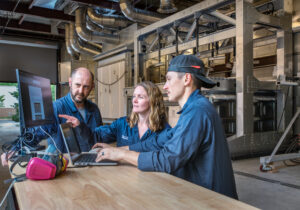 To honor WAD this year, we connected with the test and research team at Home Innovation Research Labs—an A2LA accredited CAB in Upper Marlboro, Maryland—to talk about how their accreditation supports them as they create innovation, trust, and sustainability in the residential construction industry.
At Home Innovation, their mission is to help their clients improve the quality, durability, affordability, and environmental performance of homes and home building products. They are an ISO/IEC 17025 accredited test lab, ISO 17020/IEC inspection agency, and ISO/IEC 17065 third-party certification body—all in one.
“Innovative products don’t neatly fit in building codes,” said Deanna Seale, Lab Director at Home Innovation, “and we help clients navigate the requirements for these new innovative products that are going up against the products that have been in building codes for a long time.”
The residential construction industry is regulated by departments and agencies at the local, state, and federal levels. However, finding ways for new products to make their way into the market is important for the sustainability, affordability, and quality of homes available today.
Home Innovation’s interdisciplinary research approach, which includes market research, product testing, product certification, and more, helps eliminate barriers to innovation and find a place for new products in the residential construction industry.
The Need for Innovation
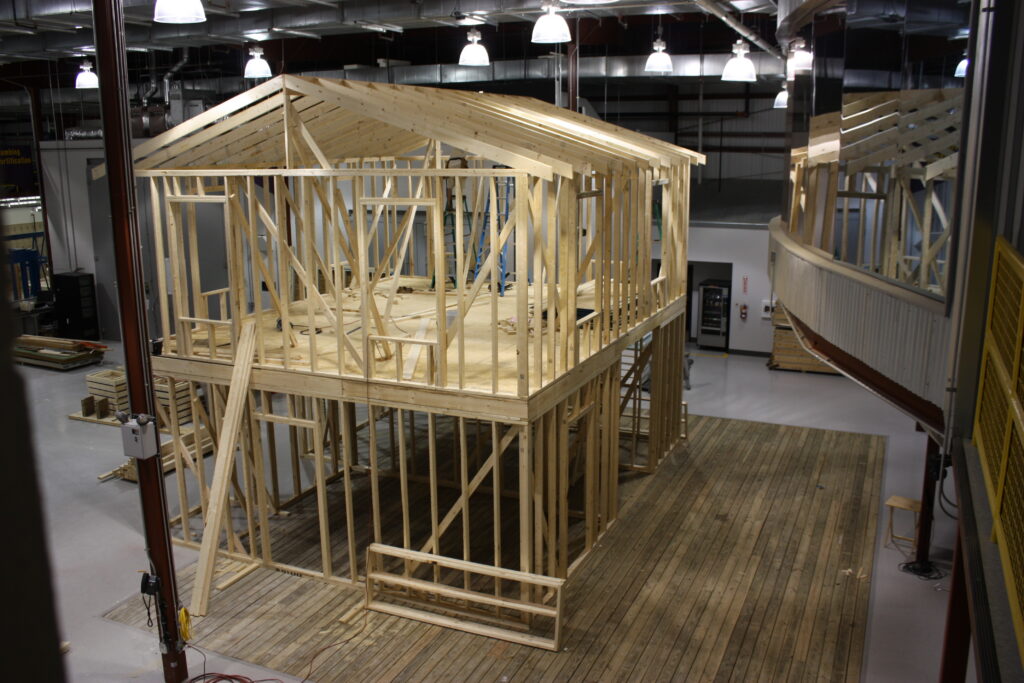 The construction industry is one of the largest recorded contributors to global carbon emissions, and Home Innovation Research Labs is helping their customers create more sustainable, innovative, and cost-effective solutions.
According to The United Nations Environment Programme (UNEP), “the buildings and construction sector is by far the largest emitter of greenhouse gases, accounting for a staggering 37% of global emissions. The production and use of materials such as cement, steel, and aluminum have a significant carbon footprint.”
A collaborative 2023 report developed by UNEP and Yale Center for Ecosystems + Architecture states that, “solutions to mitigate the buildings “embodied” carbon emissions – originating from the design, production, and deployment of materials such as cement, steel, and aluminum – have lagged. To effectively address this challenge, international action and collaboration must bring together all stakeholders from across the entire lifecycle of the buildings sector.”
Home Innovation Research Labs plays an important role in helping their customers bring their sustainable products to the market in an effort to reduce carbon emissions. Some of their customers’ innovations aim to combine multiple products into one, eliminating the need for additional materials or installation time. Others choose to create more efficient tools that make a particular technique easier, and therefore, quicker to implement. In both scenarios, the result is time saved, lower costs, and improved sustainability. And, by reducing the cost of building homes, builders can pass savings onto buyers.
Housing affordability is another significant issue for many families in the United States. According, to the National Association of Home Builders, every “$1,000 increase in the price of [a] median-priced new home will further price 156,405 U.S. households out of the market.” Finding new ways to improve the quality of homes while reducing the cost gives thousands of families a better opportunity for homeownership and upward financial mobility.
By partnering with other organizations who have made it their mission to create new products, Home Innovations Research Labs helps to bring those products to market, and therefore, supports improving the sustainability and affordability of housing.
Growing Capabilities
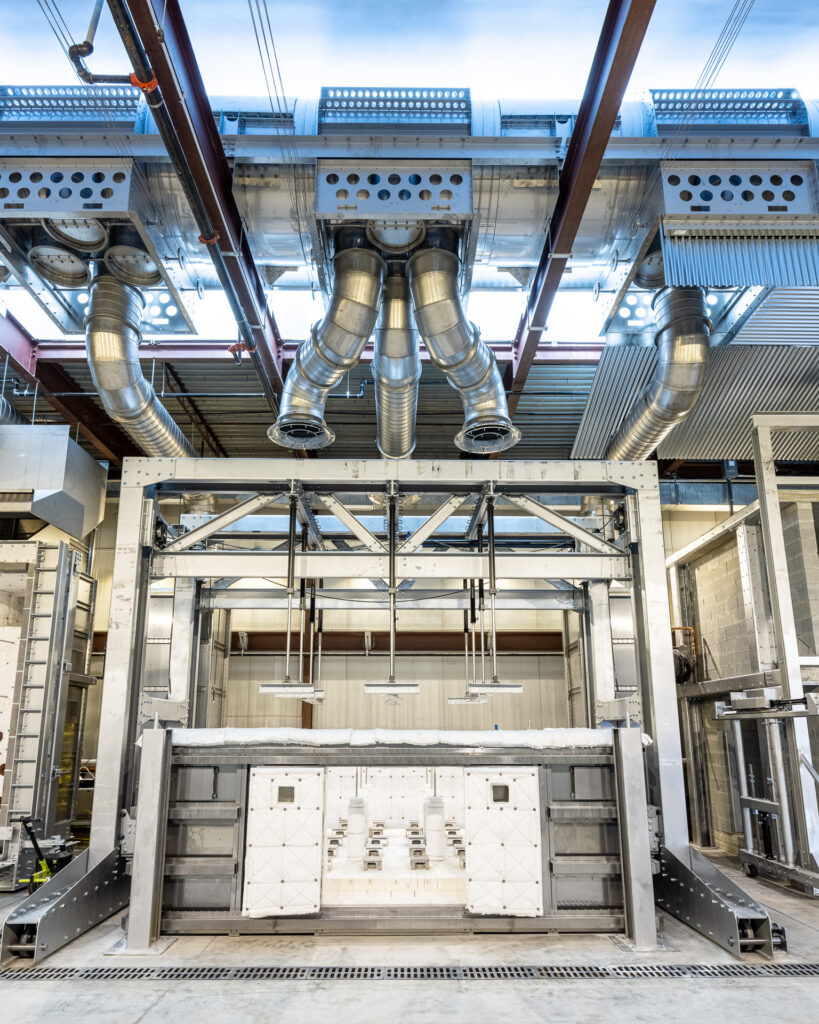 Home Innovations Research Lab recently added a fire testing certification program to their offering of accredited services. They have 7 furnaces on site that are capable of 31 different test methods. They have the capability to conduct large, full-scale testing for walls, floors, ceilings, exterior systems, and room fire growth testing. They also conduct tunnel testing for smoke development and flame spread ratings. Their smallest furnace is used for combustibility testing, an important standard in the building code that will define whether or not a new product meets regulatory requirements.
Adding additional services allows Home Innovation’s customers to meet all their needs with one organization. It saves manufacturers time and reduces costs by eliminating the need for coordination amongst different labs in multiple locations. Their wide range of capabilities allows them to serve their customers in the most effective and efficient way.
“We do everything in house,” Deanna explains. “We have clients come in as a market research client, needing help understanding how they’re going to enter the market with their new product. Then, once they have that strategy, they must prove to code officials that the product is meeting the requirements of the building code. That’s where it gets handed off and we can do the durability testing, structural testing, and fire testing.”
Accreditation: A Critical Piece of the Innovation Puzzle
Home Innovation Research Labs is accredited through A2LA for three schemes: ISO/IEC 17025 for Testing Laboratories, ISO/IEC 17020 for Inspection Bodies, and ISO/IEC 17065 for Product Certification Bodies. Accreditation to these schemes confirms that their services in each of these areas meet the global standard, ensuring high quality, repeatable, and defendable results. Defendable results are especially important when their customers present their new products to regulators in order to gain building code approval.
“Our QMS is at the heart of everything we do,” said Deanna. “All the testing we perform has a standard operating procedure, creating quality and consistency, and gives our customers confidence that they can trust the work we’re doing.”
Home Innovation’s accreditations are a testament to their dedication to offering high quality services and accurate test results. They are proud to advertise them alongside their service offerings and have made it an important talking point when working with prospective customers. Their customers can feel confident that when it’s time to gain regulatory approval for innovative new products, they have reliable test results from an organization that meets globally recognized standards.
“Accreditation is fundamental to our culture and operational DNA,” said Mike Luzier, President and CEO, Home Innovation Research Labs. “It’s what gives us our authority. It’s the foundation of who we are as a testing agency to test the claims of manufacturers to make sure they meet the building code. If you want to have your work accepted by code authorities, you’ve got to be an accredited lab. It’s just respect for the profession.”
Home Innovation’s scopes of accreditation enable them to conduct their work and support their clients as they bring their innovative products to the market. Their commitment to quality provides their customers with the most accurate test results and the critical information required to create new, innovative products that shape the future of the residential construction industry.