• Skip to primary navigation
  • Skip to main content
  • Skip to footer
  • A2LA Annual Conference
  • Apply for Accreditation
  • Accreditation Estimate Request Form
  • Portal Logins
  • Search Organizations
  • Blog
A2LA logo

A2LA

A Better World Through Accreditation

  • Accreditation
    • ISO/IEC 17025 – Testing/Calibration Laboratories
      • Acoustics and Vibration Testing
      • Biological Testing Accreditation Program
        • Cannabis Testing Laboratory Accreditation
        • A2LA-NIHC Verify Hemp Recognition Program
        • AOAC Laboratory Accreditation Program
        • NAHLN Veterinary Diagnostic Accreditation Program
        • FDA ASCA Pilot Program (Basic Safety And Essential Performance)
        • Threat Agent Testing Laboratory Accreditation Program
        • FDA ASCA Pilot Program (Biocompatibility Testing Of Medical Devices)
        • Laboratory Accreditation for Analyses of Foods – LAAF
      • Calibration Laboratory Accreditation – ISO/IEC 17025
        • State Legal Metrology Accreditation Program
      • Chemical Testing Accreditation Program
        • A2LA Consumer Product Safety Testing – CPSC
        • AOAC Laboratory Accreditation Program
        • NAHLN Veterinary Diagnostic Accreditation Program
        • Competition Animal Drug Testing Laboratory Accreditation Program
        • Cannabis Testing Laboratory Accreditation
        • WADA Testing Accreditation
        • Oregon Toxic-Free Kids Act Accreditation Program
        • Threat Agent Testing Laboratory Accreditation Program
        • A2LA-NIHC Verify Hemp Recognition Program
      • Construction Material Testing Accreditation
        • Harris County, TX/City Of Houston/Houston Port Authority
      • Electrical Testing Accreditation
        • U.S. FCC Equipment Accreditation & Authorization Program
        • CTIA Wireless Association – LTE/CDMA Devices
        • A2LA Consumer Product Safety Testing – CPSC
        • Bluetooth Validation Testing Program
        • EPA ENERGY STAR Accreditation Program
        • NAVAIR
        • Automotive EMC Laboratory Recognition Program – AEMCLRP
        • The A2LA Project 25 Compliance Assessment Program – P25
        • FDA ASCA Pilot Program (Basic Safety And Essential Performance)
        • ISED Certification & Equipment Authorization Program
      • Environmental Testing Accreditation
        • Air Emissions Testing Body Accreditation Program – AETBs
        • California Environmental Laboratory Accreditation Program – CA ELAP
        • DOD Advanced Geophysical Classification Accreditation Program – DAGCAP
        • DOD Environmental Laboratory Accreditation – ELAP
        • DOECAP Accreditation & Audit Program
        • Environmental Microbiology Laboratory Accreditation Program – EMLAP
        • EPA National Lead Laboratory Accreditation Program – NLLAP
        • Kentucky Underground Storage Tank Testing Program – UST
        • State Environmental Laboratory Assessment Program – NELAP
        • TNI Field Sampling & Measurement Organization Accreditation Program
        • Wyoming Storage Tank Remediation Program – STR
      • Forensic Examination Accreditation Program
      • Geotechnical Testing Accreditation Program
        • Harris County, TX/City Of Houston/Houston Port Authority
        • Putting Green Laboratory Accreditation Program – PUG
      • Industrial Hygiene Accreditation Program
      • Information Technology Accreditation Program
        • Gaming Standards Association (GSA)
        • Internet Protocol Version 6 (IPv6)
      • Mechanical Testing Accreditation
        • A2LA Consumer Product Safety Testing – CPSC
        • EPA ENERGY STAR Accreditation Program
        • BIFMA Compliant Accreditation Program
        • Counterfeit Part Avoidance Testing – AS6171
      • Nondestructive Testing Accreditation Program – NDT
      • Sampling & Testing Accreditation
      • Thermal
        • A2LA Consumer Product Safety Testing – CPSC
        • EPA ENERGY STAR Accreditation Program
    • ISO/IEC 17020 – Inspection Bodies
      • ISO/IEC 17020 – Inspection Body Accreditation Program
        • Forensic Examination Accreditation Program
        • Investigative Genetic Genealogy (IGG) Accreditation Program
        • Cybersecurity Inspection Body Program
        • FedRAMP Third-Party Assessment Organizations – 3PAO
        • Field Evaluation Body (FEB Accreditation Program
        • IBC Special Inspections Accreditation Program
    • ISO/IEC 17065 – Product Certification Bodies
      • ISO/IEC 17065 Product Compliance Certification Accreditations
        • The A2LA Telecommunication Certification Body Accreditation Program
        • EPA WaterSense Accreditation Certification Program
        • EPA ENERGY STAR Accreditation Program
    • ISO/IEC 17043 – Proficiency Testing Providers
      • The A2LA Proficiency Testing Provider Accreditation Program
    • ISO 17034 – Reference Materials Producers
      • ISO 17034 – Reference Materials Producers Accreditation Program
    • ISO 15189 and CLIA – Clinical Testing Laboratories
      • ISO 15189 & CLIA – Clinical Testing Laboratories Accreditation Program
    • ISO 20387 – Biobanking Accreditation Program
      • ISO 20387 – Biobanking Accreditation Program
    • ISO/IEC 17029 – Validation and Verification Accreditation Program
  • About
    • Overview
    • Board of Directors
    • Careers
    • Leadership
    • Regulators and Specifiers
    • Recognitions
    • Top Customers
  • Resources
    • Acronym Glossary
    • Annual Reports
    • Documents
    • Downloadable Content
    • FAQs
    • Press Releases
    • Accreditation Training Services by AWPT
  • Our Membership Options
  • Get a Quote
  • Online Payment

The Importance of FRE 702 in Forensic Expert Testimony

Home » Forensic » The Importance of FRE 702 in Forensic Expert Testimony

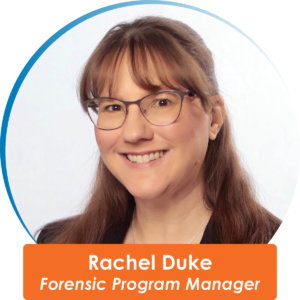
November 5, 2026 by Rachel Duke

Federal Rule of Evidence (FRE) 702 is crucial for forensic expert testimony because the trial judge acts as a gatekeeper who determines whether the proposed expert evidence is sufficiently reliable and relevant before being presented to the jury. There is an emphasis in the amendment of FRE 702 that is especially relevant to the expert testimony of forensic service providers:  

  • Helpfulness: the expert’s specialized knowledge will help the factfinder understand evidence or determine a fact in issue 
  • Adequate basis: the opinion is based on sufficient facts or data
  • Reliable methodology: the testimony is the product of reliable principles and methods
  • Reliability of application: the expert has reliably applied those principles and methods to the facts of the particular case

Why does this matter for forensic science?

During the qualification process, the forensic expert may be asked a series of qualifying questions regarding knowledge, skills, experience, training, and education. Once qualified, the forensic expert should be capable of explaining the procedures performed during testing of the evidence and the results provided in the report. The explanation of the results need not exceed what the underlying data, methodology, validation, and application can support.  

How should forensic experts prepare?

Document qualifications on a curriculum vitae (CV)

  • education and specialized training 
  • certifications or professional credentials 
  • publications and presentations 
  • experience with the particular methodology 
  • continuing education 

Know the scientific foundation of the methodology

The expert should be able to articulate: 

  •  the methodology procedure and how it works 
  • limit of detection, specificity, and sensitivity of the methodology  
  • reproducibility and concordance of the methodology 
  • appropriate quality controls 
  • relevant peer-reviewed literature pertaining to methodology 
  • acceptance of methodology within the scientific community 

Be prepared to defend the actual application

The expert should specifically identify: 

  • the items of evidence examined 
  • the observations made at time of testing 
  • the interpretation process 
  • overall technical and administrative peer review process 

Testify within the scope of the field

Forensic experts should be particularly cognizant during their testimony to not mislead, overvalue, or undervalue the evidence. For example, DNA analysts should be familiar with the limitations of the transfer, persistence, prevalence, and recovery (TPPR) of DNA. Therefore, when asked questions pertaining to how or when the DNA was deposited (or lack thereof), the DNA analyst should iterate that answering would be outside the purview of their testimony and a separate evaluation would be needed to address those specific questions.  

Be familiar with chain of custody

The chain of custody is a chronological record tracking the movement of evidence and must be maintained by all laboratories with access to the evidence. This prevents the substitution, tampering, damaging, altering, contamination, misplacement, or falsification of the evidence; thereby, maintaining the legal integrity of the evidence. Failure to establish the identification, authentication, legal integrity, and completion of the chain of custody may result in the exclusion of evidence or limitations to the jury relating to the weight of the expert testimony.

Conclusion

Under FRE 702, a forensic expert should be able explain the scientific foundation and application of the methodology, identify specific items of evidence, demonstrate the completeness of the chain of custody, and testify within the scope of the field. In addition, the expert should be cognizant of the limitations of what the scientific method reliably supports.  

Resources: 

https://www.law.cornell.edu/rules/fre/rule_702  

R221b- Annex B- Specific Requirements- A2LA Texas Forensic Science Commission Crime Laboratory Accreditation Program 

https://nij.ojp.gov/nij-hosted-online-training-courses/law-101-legal-guide-forensic-expert/pretrial/pretrial-motions/chain-custody  

Forensic A2LA,  accreditation body,  Inspection Body

Footer

Headquarters 5202 Presidents Court, Ste 220
Frederick, MD 21703
301.644.3248
info@A2LA.org
Second Location 5755 Central Avenue, Ste 201
Boulder, CO 80301
Social Icon
Social Icon
  • Careers
  • Contact A2LA
  • Lodging a Complaint
  • Get Involved
  • Privacy Agreement
  • Online Payment
  • A2LA Annual Conference
  • Apply for Accreditation
  • Accreditation Estimate Request Form
  • Portal Logins
  • Search Organizations
  • Blog

© 2026 A2LA · Powered by Orases Custom Software · Website Privacy Policy & Terms of Use