• Skip to primary navigation
  • Skip to main content
  • Skip to footer
  • A2LA Annual Conference
  • Apply for Accreditation
  • Accreditation Estimate Request Form
  • Portal Logins
  • Search Organizations
  • Blog
A2LA logo

A2LA

A Better World Through Accreditation

  • Accreditation
    • ISO/IEC 17025 – Testing/Calibration Laboratories
      • Acoustics and Vibration Testing
      • Biological Testing Accreditation Program
        • Cannabis Testing Laboratory Accreditation
        • A2LA-NIHC Verify Hemp Recognition Program
        • AOAC Laboratory Accreditation Program
        • NAHLN Veterinary Diagnostic Accreditation Program
        • FDA ASCA Pilot Program (Basic Safety And Essential Performance)
        • Threat Agent Testing Laboratory Accreditation Program
        • FDA ASCA Pilot Program (Biocompatibility Testing Of Medical Devices)
        • Laboratory Accreditation for Analyses of Foods – LAAF
      • Calibration Laboratory Accreditation – ISO/IEC 17025
        • State Legal Metrology Accreditation Program
      • Chemical Testing Accreditation Program
        • A2LA Consumer Product Safety Testing – CPSC
        • AOAC Laboratory Accreditation Program
        • NAHLN Veterinary Diagnostic Accreditation Program
        • Competition Animal Drug Testing Laboratory Accreditation Program
        • Cannabis Testing Laboratory Accreditation
        • WADA Testing Accreditation
        • Oregon Toxic-Free Kids Act Accreditation Program
        • Threat Agent Testing Laboratory Accreditation Program
        • A2LA-NIHC Verify Hemp Recognition Program
      • Construction Material Testing Accreditation
        • Harris County, TX/City Of Houston/Houston Port Authority
      • Electrical Testing Accreditation
        • U.S. FCC Equipment Accreditation & Authorization Program
        • CTIA Wireless Association – LTE/CDMA Devices
        • A2LA Consumer Product Safety Testing – CPSC
        • Bluetooth Validation Testing Program
        • EPA ENERGY STAR Accreditation Program
        • NAVAIR
        • Automotive EMC Laboratory Recognition Program – AEMCLRP
        • The A2LA Project 25 Compliance Assessment Program – P25
        • FDA ASCA Pilot Program (Basic Safety And Essential Performance)
        • ISED Certification & Equipment Authorization Program
      • Environmental Testing Accreditation
        • Air Emissions Testing Body Accreditation Program – AETBs
        • California Environmental Laboratory Accreditation Program – CA ELAP
        • DOD Advanced Geophysical Classification Accreditation Program – DAGCAP
        • DOD Environmental Laboratory Accreditation – ELAP
        • DOECAP Accreditation & Audit Program
        • Environmental Microbiology Laboratory Accreditation Program – EMLAP
        • EPA National Lead Laboratory Accreditation Program – NLLAP
        • Kentucky Underground Storage Tank Testing Program – UST
        • State Environmental Laboratory Assessment Program – NELAP
        • TNI Field Sampling & Measurement Organization Accreditation Program
        • Wyoming Storage Tank Remediation Program – STR
      • Forensic Examination Accreditation Program
      • Geotechnical Testing Accreditation Program
        • Harris County, TX/City Of Houston/Houston Port Authority
        • Putting Green Laboratory Accreditation Program – PUG
      • Industrial Hygiene Accreditation Program
      • Information Technology Accreditation Program
        • Gaming Standards Association (GSA)
        • Internet Protocol Version 6 (IPv6)
      • Mechanical Testing Accreditation
        • A2LA Consumer Product Safety Testing – CPSC
        • EPA ENERGY STAR Accreditation Program
        • BIFMA Compliant Accreditation Program
        • Counterfeit Part Avoidance Testing – AS6171
      • Nondestructive Testing Accreditation Program – NDT
      • Sampling & Testing Accreditation
      • Thermal
        • A2LA Consumer Product Safety Testing – CPSC
        • EPA ENERGY STAR Accreditation Program
    • ISO/IEC 17020 – Inspection Bodies
      • ISO/IEC 17020 – Inspection Body Accreditation Program
        • Forensic Examination Accreditation Program
        • Investigative Genetic Genealogy (IGG) Accreditation Program
        • Cybersecurity Inspection Body Program
        • FedRAMP Third-Party Assessment Organizations – 3PAO
        • Field Evaluation Body (FEB Accreditation Program
        • IBC Special Inspections Accreditation Program
    • ISO/IEC 17065 – Product Certification Bodies
      • ISO/IEC 17065 Product Compliance Certification Accreditations
        • The A2LA Telecommunication Certification Body Accreditation Program
        • EPA WaterSense Accreditation Certification Program
        • EPA ENERGY STAR Accreditation Program
    • ISO/IEC 17043 – Proficiency Testing Providers
      • The A2LA Proficiency Testing Provider Accreditation Program
    • ISO 17034 – Reference Materials Producers
      • ISO 17034 – Reference Materials Producers Accreditation Program
    • ISO 15189 and CLIA – Clinical Testing Laboratories
      • ISO 15189 & CLIA – Clinical Testing Laboratories Accreditation Program
    • ISO 20387 – Biobanking Accreditation Program
      • ISO 20387 – Biobanking Accreditation Program
    • ISO/IEC 17029 – Validation and Verification Accreditation Program
      • ISO/IEC 17029 Validation and Verification Accreditation Program
  • About
    • Overview
    • Board of Directors
    • Careers
    • Leadership
    • Regulators and Specifiers
    • Recognitions
    • Top Customers
  • Resources
    • Acronym Glossary
    • Annual Reports
    • Documents
    • Downloadable Content
    • FAQs
    • Press Releases
    • Accreditation Training Services by AWPT
  • Our Membership Options
  • Get a Quote
  • Online Payment

A2LA Launches Investigative Genetic Genealogy (IGG) Accreditation Program

Home » Press Releases » A2LA Launches Investigative Genetic Genealogy (IGG) Accreditation Program

August 31, 2026 by Julie Bonebrake

PRESS RELEASE
FOR IMMEDIATE RELEASE

This new program is the first of its kind for organizations conducting IGG activities

Frederick, Md (August 31, 2026)— The American Association for Laboratory Accreditation (A2LA), a global, nonprofit accreditation body, has launched an Investigative Genetic Genealogy (IGG) Accreditation Program, which assesses organizations that conduct IGG activities. This program is the first of its kind and gives IGG organizations credibility in criminal proceedings.

Accreditation is synonymous with quality and competence, and demonstrates technical credibility through formal, third-party validation. It confirms that a forensic inspection organization is technically competent, impartial, and reliable, and ensures their findings are credible. In addition, by following these globally recognized standards, accredited investigation activities can stand up to the intense scrutiny of a defense counsel in the court of law.IGG Program - Man Behind Bars

While many forensic testing laboratories are accredited to ISO/IEC 17025 (the accreditation standard for testing laboratories), IGG activities need to meet a different set of requirements: ISO/IEC 17020:2026, a globally recognized standard for inspection bodies.

ISO/IEC 17020 emphasizes professional judgment, documentation, and decision-making rigor. It also promotes training, competency monitoring, and adoption of best practices. Inconsistent or poorly documented inspection practices can compromise evidence integrity, but an ISO/IEC 17020 accreditation safeguards forensic inspection work and supports accurate, credible, and fair outcomes in the justice system. ISO/IEC 17020 also supports organizations that investigate crime scenes, digital forensics, and latent prints.

What is FIGG?

Forensic Investigative Genetic Genealogy (FIGG) is the investigative work of law enforcement using the leads generated by IGG. Since its emergence in 2018, FIGG has quickly become one of the most powerful tools for criminal investigators and has led to the resolution of more than 1,600 cold cases, many of which are decades old.DNA Vial
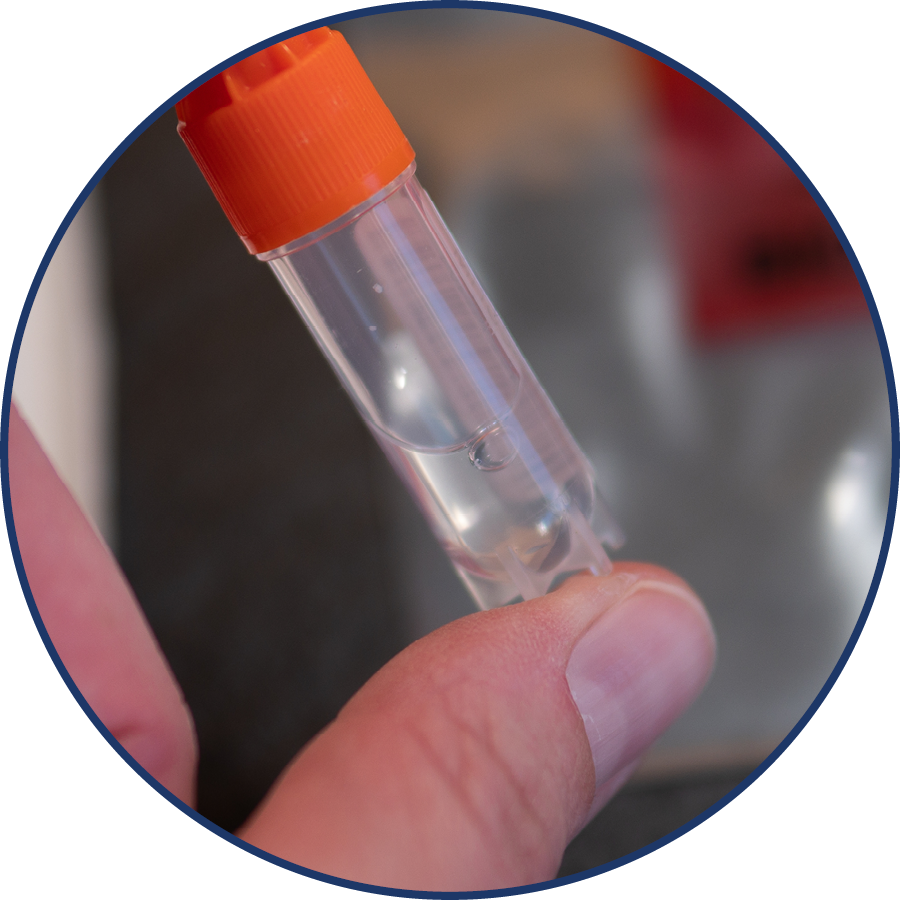
Investigative Genetic Genealogy (IGG) is the genealogy portion of FIGG, when investigators use DNA databases and public records to create family trees and generate investigative leads for law enforcement.

Several high-profile cold cases have been solved using FIGG in recent years, including the Golden State Killer case, The Bear Brook Murders, and the murders of four University of Idaho students in 2022.

How Does IGG Work?

When DNA from a perpetrator or unidentified victim is collected from a crime scene, a short tandem repeat (STR) DNA profile is generated and entered into the Combined DNA Index System (CODIS), an FBI database used to compare DNA profiles from federal, state, and local crime laboratories. If the profile already exists in CODIS, law enforcement can make an identification. However, if the profile isn’t found, investigators can use IGG instead to help lead them in the right direction.

When IGG is utilized, a new DNA profile is generated from an unknown sample using next-generation sequencing or microarray methods. This profile is then uploaded to genetic genealogy databases that are authorized for law enforcement use, typically in cases involving unidentified human remains or suspects in violent crimes.

Within these databases, the unknown profile is compared to DNA profiles voluntarily submitted by other users. Each database includes privacy settings that allow individuals to opt in or opt out of law enforcement matching.

The results of these comparisons show the amount of DNA shared between the unknown individual and potential genetic relatives. In general, more shared DNA corresponds to a closer biological relationship. When multiple related individuals are identified and share DNA with one another, they form genetic networks that can point to common ancestors.DNA Strand with Man's Profile

By integrating these genetic relationships with traditional genealogical research, genealogists can suggest potential investigative leads regarding the identity of the unknown individual. Then, leads can later be confirmed using traditional STR testing using a family reference tester for unidentified human remains (UHR) or a collected sample from a suspect.

For more information about A2LA’s Investigative Genetic Genealogy Program, visit A2LA.org/accreditation/investigative-genetic-geneaology-igg-accreditation-program today.

For more information about A2LA, visit A2LA.org/about, or email us at info@A2LA.org.

### 

A2LA is a non-profit, non-governmental, third-party accreditation organization offering internationally recognized accreditation services to testing and calibration laboratories, inspection bodies, biobanking facilities, stand-alone sampling organizations, proficiency testing providers, reference material producers, and product certifiers. For more information, visit https://A2LA.org. 

Media contact: Wallis Reed; wreed@A2LA.org; 301-644-3230

Forensic,  ISO/IEC 17020,  Press Releases

Footer

Headquarters 5202 Presidents Court, Ste 220
Frederick, MD 21703
301.644.3248
info@A2LA.org
Second Location 5755 Central Avenue, Ste 201
Boulder, CO 80301
Social Icon
Social Icon
  • Careers
  • Contact A2LA
  • Lodging a Complaint
  • Get Involved
  • Privacy Agreement
  • Online Payment
  • A2LA Annual Conference
  • Apply for Accreditation
  • Accreditation Estimate Request Form
  • Portal Logins
  • Search Organizations
  • Blog

© 2026 A2LA · Powered by Orases Custom Software · Website Privacy Policy & Terms of Use